

It starts with a scratchy throat.
Then someone starts sneezing. Your child wakes up congested. By afternoon, you may have a headache.
For St. Louis families, September can make one question surprisingly difficult.
Is it fall allergies, a cold, COVID, or the flu?
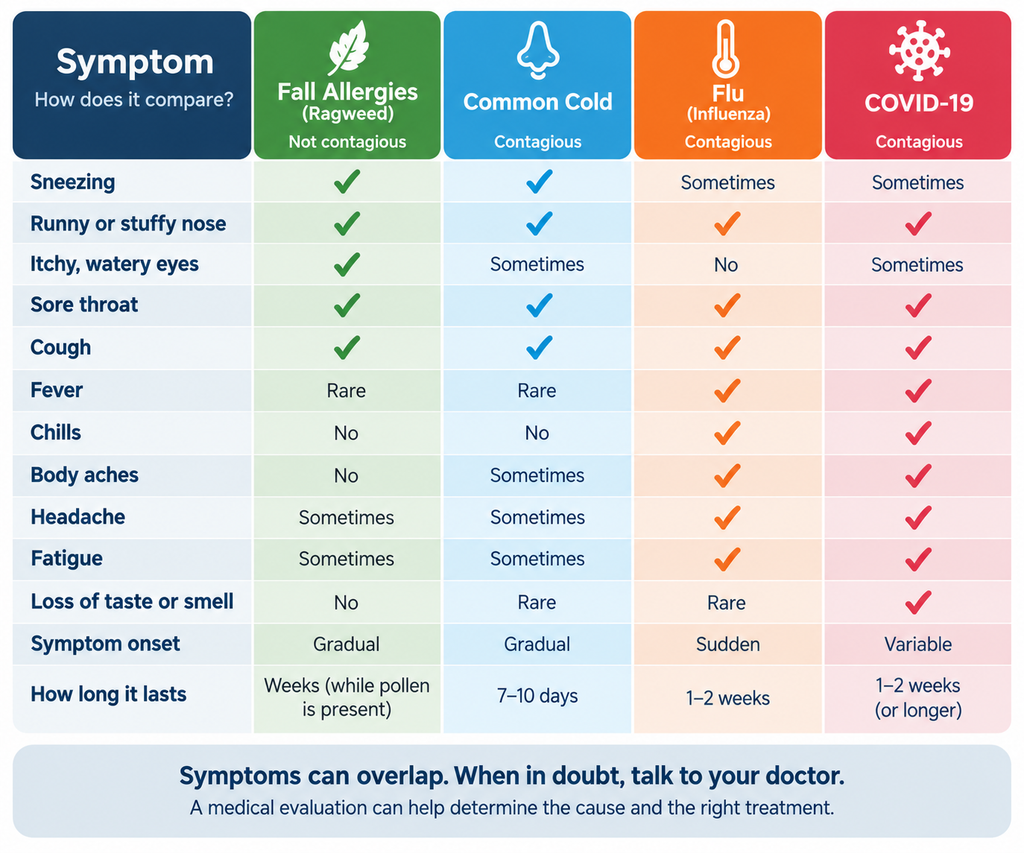
The symptoms overlap! Getting the right diagnosis matters!
At Link Primary Care, our physicians help families sort through these symptoms without a rushed visit.
Members have access to same-day appointments and direct communication with their care team.
Adults are $109 per month, and children are $59 per month with an adult membership.
There are unlimited doctor visits and no copays for covered primary care visits.
Schedule a consultation with Dr. Jeffrey Davis to learn whether Direct Primary Care fits your family.
Why September Can Be Confusing in St. Louis
Early fall creates the perfect environment for symptom confusion.
Children return to classrooms. Families spend more time around school activities and sporting events.
Respiratory viruses begin circulating as people spend more time together.
Meanwhile, ragweed and other allergens make many St. Louis residents miserable. St. Louis weather can also contribute to difficult allergy seasons, because changing weather and air quality may aggravate respiratory symptoms for some people.
That means you should not assume every September sniffle is “just allergies.”
Fall Allergies vs. COVID: Know the Common Symptoms
Seasonal allergies happen when your immune system reacts to substances such as pollen.
They are not infections, and allergies are not contagious.
Common symptoms include:
- Sneezing
- Runny or stuffy nose
- Itchy nose
- Itchy or watery eyes
- Postnasal drainage
- Sinus pressure
- Cough
- Fatigue
Itchy, watery eyes and frequent sneezing often point toward allergies.
COVID and other respiratory infections can cause congestion too. However, they cause other symptoms suggesting an infection like fever, chills, significant fatigue, sore throat, cough, headache, and body aches.
Could It Be Influenza?
Influenza often feels different from seasonal allergies.
Flu symptoms commonly appear more suddenly, when someone feels normal in the morning and sick later that day.
Influenza symptoms include:
- Fever or feeling feverish
- Chills
- Cough
- Sore throat
- Headache
- Muscle or body aches
- Significant fatigue
- Nasal congestion
Not everyone with influenza develops a fever.
Children can also develop vomiting and diarrhea with influenza.
What About the Common Cold?
A cold can be even harder to distinguish from allergies.
Colds frequently cause congestion, sneezing, sore throat, and coughing.
Unlike allergies, however, a cold is caused by a virus.
Cold symptoms usually resolve as the infection runs its course.
Allergy symptoms may continue for weeks while pollen exposure continues.
Watch the pattern.
Does the sneezing get worse after soccer practice? Do symptoms flare after mowing the lawn? Are itchy eyes your biggest complaint? Those clues could point toward allergies.
Conversely, a sore throat followed by increasing congestion and coughing suggests an infection.
Fall Allergies vs. COVID: When Should You Call a Doctor?
Consider contacting your doctor when symptoms are severe, unusual, persistent, or worsening.
Medical evaluation may also be important when you have asthma or another chronic condition.
When something feels significantly different from a routine cold, ask for medical guidance.
Treating Fall Allergies
Allergy treatment starts with reducing exposure whenever practical.
During St. Louis ragweed season, consider keeping windows closed when pollen levels are high.
Changing clothes after spending significant time outside may also help.
Showering before bed can remove pollen from your skin and hair.
First-line medicine options can include antihistamines and steroid nasal sprays.
Why Antibiotics Are Not the Automatic Answer
Patients sometimes expect antibiotics when congestion becomes severe.
However, antibiotics treat bacterial infections, not treat influenza, COVID, the common cold, or seasonal allergies.
Unnecessary antibiotics can cause side effects and contribute to antibiotic resistance.
Direct Primary Care for St. Louis Families
Direct Primary Care, commonly called DPC, uses a different approach to everyday healthcare.
Patients pay their practice directly through a monthly membership.
That membership generally provides access to a broad range of primary care services.
Link Primary Care brings that model to individuals and families in the St. Louis area.
Our approach centers on six promises:
Great access to physicians. You should be able to reach your team quickly when you need help.
Quality time with patients. Good medical decisions require more than a rushed conversation.
Trusting personal relationships. Your doctor knows you and your history.
Excellence in clinical care. Convenience should never replace careful, evidence-based medicine.
Affordable pricing. Adults pay $109 monthly. Children pay $59 monthly with an adult membership.
A relaxed, comfortable clinic experience. The office is clean, cozy, and relaxed.
A Real Link Primary Care Family Experience
One family described exactly why this accessibility matters:
“Link Primary Care is a great fit for my family. My boys are 14, 9 and 8. Something is always coming up with them.”
Meet Your Link Primary Care Team
Dr. Jeffrey Davis founded Link Primary Care after decades of experience as an physician; his experience provides a valuable perspective when patients develop an unexpected illness or injury.
Dr. Lillian Whalen is a family medicine physician who emphasizes thoughtful investigation and understanding the causes behind patients’ concerns.
Medical assistants Annette and Casey are also important members of the Link Primary Care care team.
Why Direct Primary Care Can Work for Busy Families
Traditional insurance-based primary care can involve copays, billing questions, and limited appointment availability.
Urgent care may solve an immediate problem but rarely provides long-term continuity.
DPC takes another approach.
At Link Primary Care, the adult membership is $109 per month.
A child membership is $59 per month with an adult membership.
Membership includes unlimited doctor visits, primary care, wellness care, and urgent care. You also get access to a discount pharmacy., and significant discounts on many laboratory tests and medications.
Insurance can still be important.
Link Primary Care recommends insurance for major illnesses, injuries, hospitalizations, and healthcare outside the primary care setting.
Think of DPC as a way to make everyday care fast, easy, and accessible.
Don’t Spend September Guessing About Your Symptoms
Fall should mean Cardinals baseball, neighborhood walks, school activities, and cooler evenings.
It should not mean weeks of wondering why everyone in your house is congested.
Link Primary Care gives St. Louis families great physician access, quality time, and trusting relationships.
You receive excellent clinical care in a relaxed environment with predictable pricing.
Same-day appointments are available—don’t wait until symptoms become harder to manage.
Schedule a one-on-one consultation with Dr. Jeffrey Davis and learn how Direct Primary Care can simplify your family’s healthcare.
You can also visit Link Primary Care online to review services and sign up for membership.
Get more information on our website at linkprimarycare.com